Wednesday, April 23, 2025

2025 Native Plant Sale

The Ecology Club is teaming up with Go Green Park Ridge again this year for our annual native plant sale - May 16th (4-6pm) & 17th (9am - noon).  We'll have over 50 species of native flowers, grasses, and shrubs.  Park Ridge Park District has sponsored a compost give-away, so BYO 5-gallon bucket (although we will have some free buckets).  We will have people available for garden design help if you need it.  Check out the species list here and feel free to share the flyer.


Tuesday, November 30, 2021

Oak Savanna Prescribed Burn 2021

We did our first ecological prescribed burn in the Maine East Oak Savanna in 18 years!  Thanks to Ken Schaefer and some of our Ecology Club members it was a huge success.  

What is the value of doing these burns in oak savannas?  Check out this response from oaksavannas.org/fire-fuel.html :

Managing Fire in Oak Savannas

Oak savannas are fire-dependent ecosystems and fire is an essential element in their establishment and management. There are two kinds of fires in ecosystems: wildfires and prescribed fires. Wildfires are those that have started spontaneously, generally by lightning. Prescribed fires are those set by land managers to bring about desirable changes in ecosystems and are based on a written plan, the burn prescription. We are dealing here only with prescribed fires.

Fire plays several important roles.
• Removes oak leaves and litter, opening up the soil so that plants can grow faster. This also permits planted seeds to reach the soil.
• Helps perpetuate fire-dependent species.
• Helps in control of harmful insects or diseases.
• Improves wildlife habitat.
• Enhances the appearance of the site and increases the scenic values.
• Helps improve access to the savanna, making it easier to walk the property and survey the ecosystem.
• Top-kills woody vegetation, shrubs and small trees, but does not kill the oaks. Top-killing does not eliminate the undesirable woody plants, but sets them back.
• Kills invasive conifers such as red cedar.
• Top-kills brambles.
• Consumes downed brush and branches, making it possible for fires to carry better.
• Hazardous fuel reduction.
• Recycles nutrients from the litter into the soil.

Fire is one of the most cost-effective ways of maintaining a restored savanna, but should always be used as part of an integrated management system. Fire should never be used by itself. Also, fire is not a substitute for brush removal. In fact, it is undesirable and counterproductive to burn an unrestored savanna, because fire does not eradicate brush. Burns should only be conducted after the initial major restoration work has been completed.

Friday, March 20, 2020

2019-20 School Year

 Although it was cut short, we still had an amazing year in the Ecology Club!  Lots of new faces this year :)  We had our annual salsa-making competition with the CONNECT program where we used produce from our vegetable garden.  Special thank you to Teri Simpson and her students last summer for tending our garden while we were away!  And much thanks to Bob Borowski from Buildings & Grounds for carving out some lovely tree stump chairs to add to our outdoor classroom in the oak savanna (see 3rd pic below).  There is now enough seating for a full class!  Clearing invasive buckthorn is a constant project for us but it is therapeutic work we do out there. We collected seeds from our prairie butterfly garden and set up our strawberry containers for winter sowing.  We were hoping to have another native plant sale this Spring using plants we've grown from seed but maybe next year!  We also started to set up an aquaponics tank.  Maybe next year on that one too :/  And our trip to the One Earth Film Festival had to be cancelled in March as well. Despite the global setback, we had fun!  And we're excited to decide on some projects for next year!  Check out our full photo album!

And see our slideshow outlining more details about our natural landscapes on the Maine East campus.


Monday, May 21, 2018

Arbor Day Tree Climbing Event

This year the Park Ridge foresters approached our Ecology Club about hosting a tree climbing event with them for Arbor Day.  We were intrigued and had several meetings to learn about Tim Lynch's company North Branch Tree Climbing and walk around campus to find the right oak tree for the climb. Tim is a Des Plaines fire fighter and has always been into exploring the outdoors with his three girls.  He started up this company a little over a year ago.  The tree we chose was inspected, prepared (pruned), and tested (3-hour long test climb) before the day of the event.  And we had about eight students go up in the tree that day over a 3-hour period. 

Here is a news article about the event.  And another.

And here is a photo album.

I can honestly say it was exhilarating seeing the tree from above and actually walking around in the limbs at around 40 feet above the ground. You go up so slowly and hoist yourself up using a pully system with the ropes.  Several students who went up pretty far had only planned on going up 10 or 20 feet because they said they were scared of heights.  But you learn to trust the system in a very methodical way... so by the time you're 40 feet up the anxiety wasn't really there for them.  I felt the same way!  We all came down with a huge smile throwing high fives and feeling a huge sense of accomplishment.  We all agreed that in many ways it gives you a broader perspective and respect for these mighty oak trees.  We're excited to plan this again next year!


Tuesday, January 30, 2018

Service Learning 2017-18

Lots of great projects in APES for this year!  We may even work with Marketing students to advertise some of our events!

1. Oak Savanna Outreach - working on trail maintenance and getting a new bench for the outdoor classroom. They are also helping remove lots of invasive buckthorn.  They helped plan and host the Oaktober Blitz and are now working with the Park Ridge foresters and North Branch Tree Climbing to plan a tree climbing event for Arbor Day, April 27! There will also likely be an oak savanna work day open to all students, parents, and staff on Earth Day, April 22nd.  Follow them on instagram @MaineEast_oak_savanna.
2. Green Infrastructure in Our Community with GIS Mapping - students hope to bring awareness to storm water management issues in our community by creating an ESRI Story Map highlighting green infrastructure features.  Examples include permeable pavement, rain gardens, rain barrels, gutter diversion into gardens, bioswales, and urban tree stands. We will be working with the MWRD and looking for other community collaborators. Anyone with GIS mapping skills want to help us out?

3. Climate Change Awareness - two groups are working on this. There is a tentative plan to put together a panel discussion with students from Lake Forest HS with climate scientists and others. They are in communication with Dr. Mark Potosnak of DePaul University to serve on the panel. Date TBD.

4. Native Butterfly Garden Art Project - several artists are researching the wildlife supported by our native prairie plants near the science wing.  They will be painting stepping stones for the path that winds through it!

5. School Green Report Card - this hasn't been updated in many years! Students are updating this document and assigning our school a grade for sustainability efforts in a variety of categories (waste reduction, energy conservation, land use & landscaping, water quality & conservation, air quality, & student/community awareness).

6. Future Teachers Project - several students who plan on going into education will be creating short video lessons for our freshman biology teachers to use with their students. They will take them on a tour around campus to learn about ecosystem services in our oak savanna and butterfly garden, bat boxes and tracking, symbiotic relationships between species we're supporting, and calculation of carbon sequestration.

7. Hunger Banquet - How do environmental and humanitarian issues overlap? Students are investigating this question in different places around the globe then editing Oxfam's script to host a Hunger Banquet fundraiser at 6pm on March 20th in the faculty lounge!  Proceeds will go toward our school-wide fundraiser to support hurricanes victims in Puerto Rico.  See post from 2016 students who did this project.

8. Vegetable Garden - Students harvested our vegetables and herbs that were tended over the summer by the special education department.  They helped host a salsa-making contest in October with our CONNECT mentoring program and the Latino Club.  It was so much fun!  The service learning group is starting new seeds indoors in the next few weeks and will be filling a new herb tower that will be managed in collaboration with Foods students.
9. Bat Boxes on Campus - students will be relocating two bat boxes that were made by Evan Bierwaltes as his Eagle Scout Project in 2013.  They will also be using a tracking device in the spring to collect data on the species that flying in our area.  On Feb. 24th they will presenting with Incredible Bats at the Friends of the Chicago River Student Congress to educate middle and high school students about the ecological and economic importance of bat conservation. There will be live bats!  Join in!

10. Native Butterfly Garden Seed Collection, Sowing, and Plant Sale - see this post. Mother's Day Plant Sale fundraiser will be on Sat. May 12 from 10-2pm.


Monday, January 29, 2018

Native Butterfly Garden Seeds - Collecting, Sowing, & Selling

Students have collected over 25 species of native prairie flower and grass seeds from our native prairie garden this fall! We also accepted a generous donation of over 50 more species from Linda Walker of Wild Ones.For the first time ever we plan on trying some "winter sowing".  Here's the method we plan on using, although we might also experiment with plastic strawberry containers to see what works best.


These seeds must experience winter in order to geminate so they will be kept in these containers outside starting next week! Feel free to join the Ecology Club on Thursdays in room 302 to help get these planted. Last year we made over $600 with our native plant fundraiser. Let's hope we can make it happen again, this time with our home-grown batch!

Monday, October 16, 2017

It's Oaktober!

To Celebrate Oak Awareness Month we will be hosting 30 alumni from the Class of 1977 for a Maine East oak savanna work day.  They will be cutting out invasive species, maintaining our trail, and building us another bench for our outdoor classroom. Shortly after they leave we will be co-sponsoring an event along with Go Green Park Ridge that we're calling an Oaktober Blitz!

Oak trees are being threatened by invasive species, diseases, and are not commonly replaced. Yet oaks are a keystone species! A variety of wildlife depends on oaks to survive including 557 types of caterpillars which help feed birds and other animals. A 25 inch diameter oak tree can also intercept 3,492 gallons of storm water per year, reducing storm runoff and flooding.

This Oaktober Blitz is a citizen science effort that will document old oak communities in Park Ridge by marking, measuring, and identifying the tree species. 


Teams will meet at Maine East’s Oak Savanna (Dee & Dempster entrance) for a kickoff presentation by The Morton Arboretum. Maine East Rhythm Project (MERP) will provide some inspiration and entertainment as you arrive! Attendees will be with a trained leader and sent to various sites to document information about oak trees. Teams will be recognized for finding the largest diameter tree and also documenting the most trees.

Driving from Maine East to one additional location will need to be a part of this event (unless you're a Maine East student), so please be aware that children cannot be simply dropped off. Locations will include Northwest Park, Oakton Park, Maine East, and more!

Sign up as an individual or with a group of friends or family. Credit for service hours will be given.

AND - stop by the Maine East Oak Savanna (Dempster & Dee) any time between 8am and 1pm to pick up a FREE OAK TREE! We have 50 to give away! (c/o MWRD)

Friday, September 15, 2017

Salsa-making Competition 2017

The Ecology Club teamed up with the Latino Club and the CONNECT mentoring program to throw down a bunch of delectable salsa and guacamole concoctions for our annual salsa competition. We pulled fresh herbs and vegetables right out of our school garden located just steps from East's newly remodeled Foods classroom. Fun & tasty annual tradition!  Thanks to Mr. Roubitchek for coming over to judge - tough job.


Monday, May 8, 2017

Service Learning 2016-17

This year's AP Environmental Science projects got a late start - but you know what is said...   better late than not at all!

1. Vegetable garden is being prepped and planted after a few-year hiatus.  APES students are working with the special education department on this project.


2. Digging up unwanted trees in our butterfly garden.  A group is working on a design and grant proposal for a professional educational sign.


3. Oak savanna - we've got a group working on another bench to help complete seating for our outdoor classroom by the pond in our 1-acre oak savanna. Now we just need a path that requires less maintenance and a huge work day (!) to remove the invasive buckthorn, etc.  We only made a small dent in the trail improvement this spring but a group of Maine East alumni will be helping us out in October!


4. Data collection about carbon sequestration value of trees in our oak savanna.

5. Native plant awareness and sale - May 29th from 10 - 2pm near the Dee & Dempster entrance by the oak savanna.  Here is our Facebook event for the sale.

6. Bird bath and feeder for butterfly garden - a creative design to repurpose old materials :)

7. Climate science student survey and awareness campaign.

8. And more - stay tuned...

Friday, September 2, 2016

2016 Hunger Banquet

Ecology club members worked with AP Environmental Science students (Phil Hua-Pham, Jocelyn Gonzalez, Charley Rasmussen, Rianne Parr, Faraz Hashmi, Jordimar Ariaga, Amal Sheth, Rene, Suban Chuhadry, Salman Chuhadry) to organize a fundraiser and awareness campaign for global poverty and environmental issues.   Students, teachers, and community members were invited to join either the low, middle, or high-income part of the world to experience what life is like for those of us who go without.  As you can see in the video below and Bugle article written up by a reporter who attended, this simulation made a big impact on people. There were even five children in the audience, several of whom spoke at the end about how eye-opening this was. I'm extremely proud of my students for their execution on this!

This event followed the Oxfam Hunger Banquet model to highlight the disparity in access to food and resources between low income and high income groups. This fundraiser was part of a greater effort to unite our school through one common initiative - adopting a Kenyan Village. Various clubs at Maine East worked hard to raise over $4,000.  Through this year-long effort  the Maine East Global Initiative project has been working alongside Free the Children in order to bring education, clean water, food security, and healthcare to these Kenyans in need.


Sunday, September 14, 2014

Sept. 20th Oak Savanna Work Day - Join us!

Maine East is having an Oak Savanna work day and new fence kick-off party on Saturday, Sept. 20th from 9 - noon to focus on ecological restoration. A generous donation by Cindy and Scott Grau helped to provide a new fence to protect this relic of the past so they will be honored at 11:30 during a ribbon-cutting ceremony. The oak savanna was the dominant landscape in our area before modern development but is now one of the most endangered ecosystems on Earth. Many years of hard work by the Maine East Ecology Club and the Oakton Community College Ecology Club continues to keep this area managed and free of invasive species. An ephemeral pond provides a refuge to a variety of wildlife, including migratory birds, and a 2013 IDNR grant funded the planting of new bird-friendly shrubs throughout the preserve. Future plans include creating a more permanent stone path and seating area for students near the pond as well as installing a wildlife camera trap. If you'd like to stop by at 11:30, students and staff will have collected native forest and prairie seeds to share with members of the community. If you come you'll also be able to see a beaver lodge that was built sometime in the last six months on our Oak Savanna pond! Lots to explore...

Monday, June 9, 2014

Fundraiser & Bats Show

We are selling bird, butterfly, and bat houses for our fundraiser this year!  Check out the document below for details.  A local Park Ridge resident makes these out of cedar and only asks for the cost of materials.  All of the profits go to us!  Thanks Mr. Sigg!
Fundraiser Doc


And we recently hosted the Incredible Bats at Maine East along with the Youth Development program.  I received numerous comments afterward about how interesting and informative it was.  So much to learn about the many benefits of our native bats.  A few days after the show Daniel and Sharon Peterson were profiled along with their bats in the Chicago Tribune...  check it out!


Monday, June 2, 2014

The Green Report Card and Beyond

Tom Joseph

From 2007 to 2011, the Sustainable Endowments Institute (SEI) published a sustainability
report card for American and Canadian colleges. In 2010, 322 colleges participated in this program by submitting thorough surveys, which contain information on each school’s sustainability in regards to campus operations, dining services, endowment investment practices, and student activities. This information is provided by administrators, faculty, and staff at each university to provide a broad and relatively unbiased data set to create the
Green Report Card. This survey included terms, regulations, and recommendations from nationally recognized sustainability organizations and federal agencies to obtain specific and somewhat easily verified information. Furthermore, after each survey was administered, the SEI created a secondary survey to obtain feedback on primary questionnaire. As a result, SEI’s Green Report Card has improved with each year, leading to a comprehensive and unbiased assessment of American and Canadian colleges’ sustainability.

Three examples of SEI’s work can be seen in their assessment of the University of Minnesota in the Twin Cities, the University of Illinois at Urbana-Champaign, and Brandeis University near Boston. In SEI’s most recent report card from 2011, the University of Minnesota was noted for its energy conservation and use of some renewable sources, as well as its sustainable dining systems, buildings, and use of public transportation. The U of M was given A’s in all categories, matching its overall grade. Brandeis, meanwhile scored lower, mainly due to its older buildings and lack of transparency in regard to its endowment. These detractors were outweighed, however, by the university’s commitment to renewable resources, reducing greenhouse emissions, and student involvement in sustainable practices. This assessment gave Brandeis University an overall grade of a B, as a result. The University of Illinois, meanwhile, was praised for its sustainable practices and programs campus-wide. However,the university was also harshly criticized for its endowment and shareholder policies, due to its use of proxy voting, which reduced the voters’ voice. This resulted in an overall grade of a B, mostly due to the F it received in the shareholder engagement category.
The Sustainable Endowments Institute moved on to a new project after 2011, in the Billion Dollar Green Challenge.
This program encourages colleges, universities, and other nonprofit institutions to invest a combined total of one billion dollars towards energy efficiency improvements. The funds for these investments come from the partner organizations’ participation in green revolving loans. Within this model, organizations’ savings from the use of energy saving measures will be use to finance loans to other partner organizations. These organizations will use the loaned funds to fund energy efficient equipment and programs, which will save them money, and will in turn be used to pay back the loans and give out further loans to others.
In a similar vein, programs are available to give grants to high schools and elementary schools to fund sustainable equipment or practices. One such organization that gives out these grants is the Green Schools Initiative.
This organization promotes the use of sustainable and energy saving products to maintain ecological sustainability and responsibility. In applying for their awards and grant, the Green Schools initiative allows small schools to engage in sustainable practices, despite their usual high costs. This program is not a loan, like the program used for universities and large organizations. This takes the pressure off of these small institutions and allows them to decrease their ecological footprint, while maintaining their economic stability. There are many other organizations waiting to give out money for this cause, it’s just a matter of applying.
The success of these programs is undeniable, as schools and organizations have consistently decreased their carbon footprint and energy costs. With this in mind, it is apparent that these programs are not just beneficial, but invaluable. If the world is to continue on the path of industry, concessions will have to be made to preserve the environment, at least for our own safety and well-being. Programs like these are a simple start towards a sufficient future, as trivial as they may seem.

Saturday, November 2, 2013

Thank you IDNR! Fall 2013 Oak Savanna Planting and Restoration Day

Migrating and resident birds along with other wildlife received another home make-over in the Maine East Oak Savanna Saturday Oct. 26th. The Ecology Club and other student helpers came out to to help create and restore habitat for our wild animal neighbors. Using funds from the IDNR Schoolyard Habitat Action Grant, students and teachers planted 40 new native shrubs, cut out invasive European Buckthorn and goldenrod, and picked up trash that blew into our 1-acre nature preserve.  They also collected acorns and hickory nuts to germinate and later plant.

 With help from Art from Art & Linda's Wildflowers, club members and others were able to increase campus biodiversity, maintain a unique learning space, and get more acquainted with our little slice of wilderness. New bird feeders and houses will be going up soon!

Sunday, March 24, 2013

Bats!

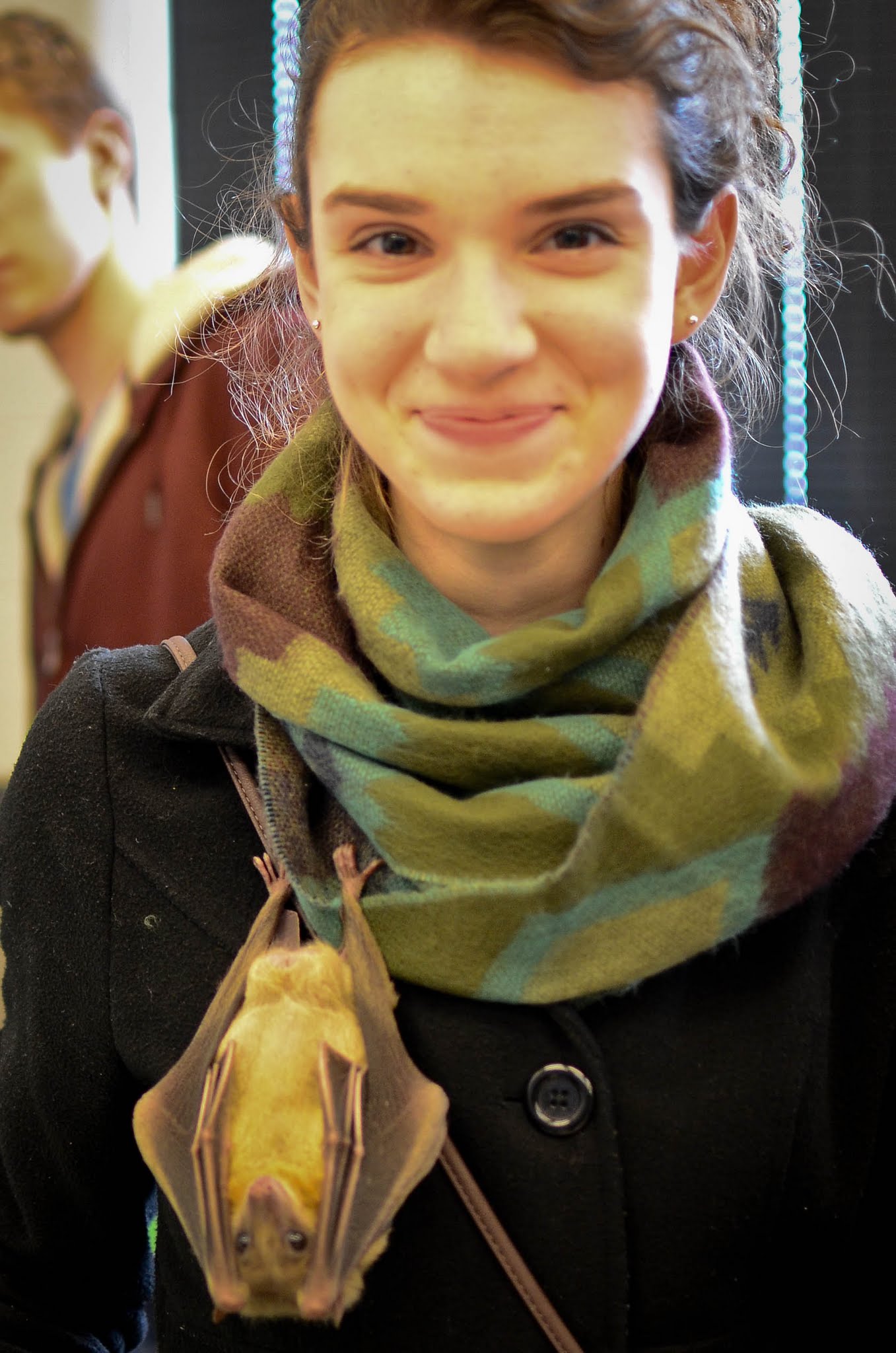
About twelve of us headed to Curie High School Feb. 23rd for the Annual Friends of the Chicago River Student Congress.  Evan brought his Eagle Scout project bat boxes to show and tell during our workshop presentation given alongside Sharon Peterson of Incrediblebats.com.  Sharon brought two Egyptian Fruit Bats and two African Straw Bats to wow us with.  Amazing creatures...  She discussed the most common bat myths - "bats are blind", "bats are diseased", etc. and talked about how vital they are as keystone species to the balance of our ecosystems.  Among their many roles, they spread seeds to maintain plant biodiversity and manage insects to keep pest populations in check.  After a brief discussion about the white-nosed fungus which has been decimating populations in the U.S. :(  she brought the bats out, fed them and allowed us to get some nice photos (click here for full album)!