Thursday, May 31, 2012

Butterfly Garden - Red/Swamp Milkweed

Guest Blogger:  Jay Garcia, class of 2012!

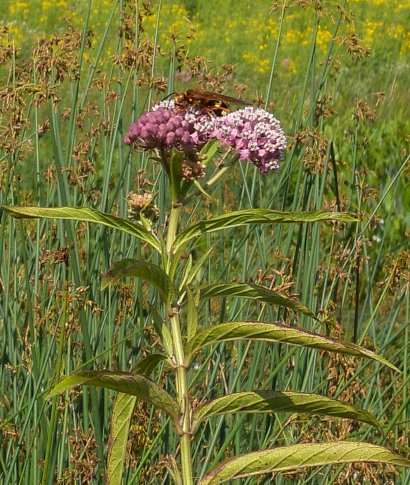
No, it’s not Spanish you’re reading. It’s the scientific name for the Red Milkweed. Wonder why it’s called the Red Milkweed? Well, let’s see. It looks red (no brainer) and it’s part of the milkweed family. Hence, Red Milkweed! Yeah, scientists aren’t that creative when naming such an awesome plant like this!     

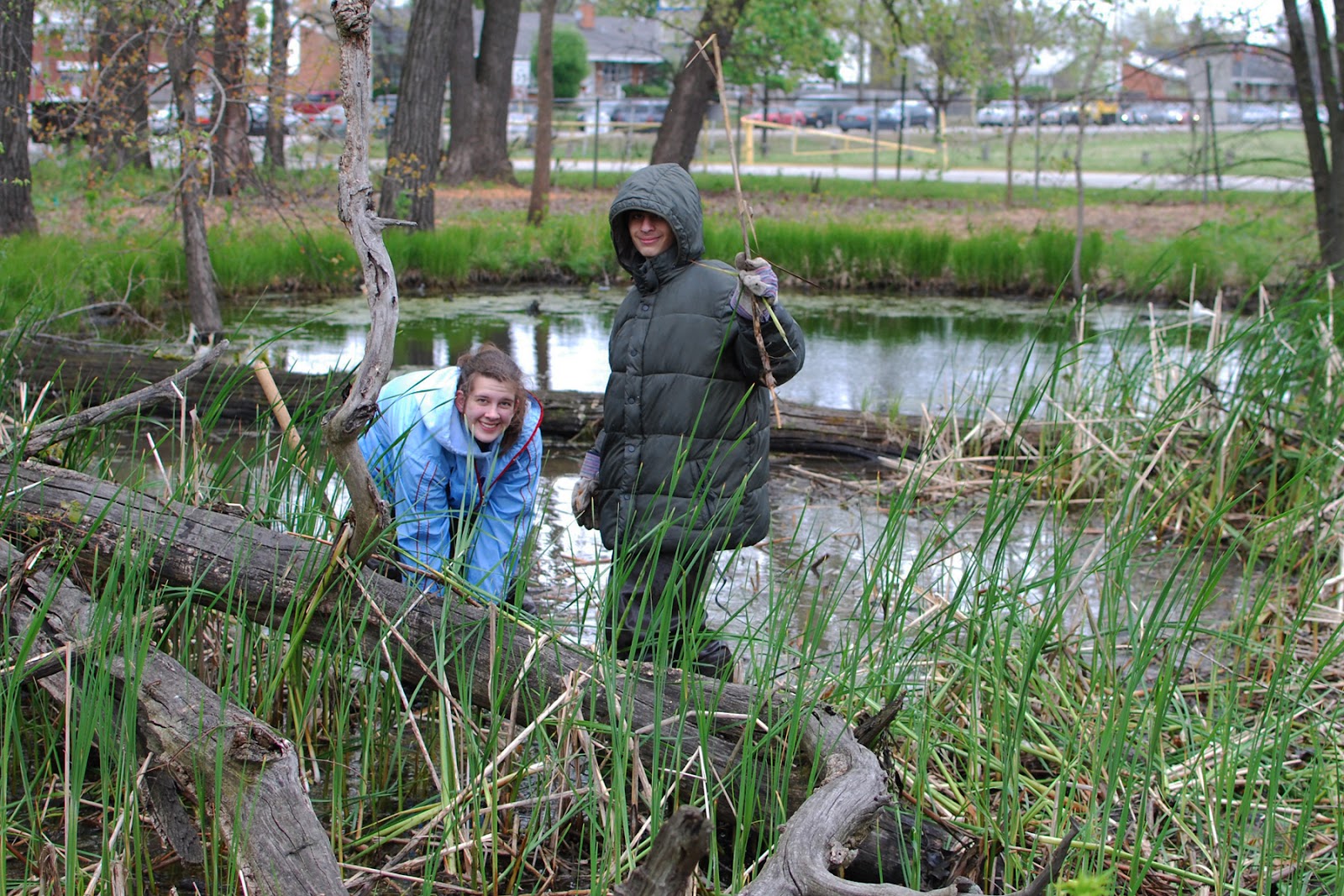
The Red Milkweed is naturally found in low lying areas, like swamps and ponds. But, we found this plant here in our butterfly garden! Score one for the Maine East!
These plants would like damp soils in full sun to partial shade, which can best describe the Butterfly Garden! One fun fact: The Red Milkweed can be found along ditches. Now that’s cool. This plant produces rich colors from deep rose to deep purple. So, not really red…ish. But, beautiful right?    

This plant is also great food for the Monarch larvae to come! They can just eat the leaves and as time goes on, the larvae turn into beautiful Monarch Butterflies! These butterflies love Milkweed.

Ever wonder how they get made? Well, since this is a blog post, I assume we all know about the birds and the bees. But, the mommy lays her eggs on Milkweed plants, then after about 4 days, the eggs hatch and turn into caterpillars, they eat the leaves off for food before they go into the pupa stage. After the pupa stage, Bibbidi-Bobbidi-Boo! The caterpillar turns into a beautiful Cinderell…erm, Monarch Butterfly.            

The bad news? The plant is poisonous if it’s ingested. So, I guess we can’t eat it…but the Monarch Butterfly can! Maybe that’s why they’re also poisonous. Perhaps, the butterfly possesses a unique ability that can have them eat the milkweed without dying off. As a result, all that ingestion made the butterfly poison. Maybe I’ll ask Childress. (“IT’S RIHA!”)

Saturday, May 5, 2012

Mother's Day Native Plant Sale

We'll be at it again Mother's Day weekend to raise money for our Oak Savannah restoration project (see previous posts for details).  Art & Linda's Wildflowers will be providing over 50 species of native prairie and woodland flowers, grasses, and ferns.  They will sell for $4 each.  UPDATED plant list:

Ferns: Ostrich Fern, Interrupted Fern

Grasses/Sedges:  Little BluestemVirginia Wild Rye(tolerates shade), Northern Sea Oats(tolerates shade), Gray's Sedge(wet soil, tolerates shade), Woodland Brome Grass(prefers light shade), Beak Grass(prefers light shade), Canada Wild Rye(tolerates shade), Prairie Brome Grass(full or partial sun), Prairie Dropseed


Prairie/Full Sun Flowers:
Spring Blooming - Prairie Smoke, Shooting Star(full or partial sun), Marsh Marigold(full or partial sun, wet soil)
Summer Blooming - Foxglove beardtongue, Black-eyed Susan, Purple Coneflower, Yellow Coneflower, Rattlesnake Master, Prairie Blazing Star, Dwarf Blazing StarButterfly Milkweed,  Ohio Spiderwort, Purple Prairie Clover, Culver's Root, Prairie Coreopsis, Sand Coreopsis, Wild Bergamot(or partial sun), Compass PlantWild Quinine, Lead Plant, Prairie CinquefoilKankakee Mallow(or partial sun)

Late Summer/Fall Blooming - New England Aster, Smooth Blue Aster(or partial sun), Obedient PlantPrairie Cinquefoil, Round-headed Bush Clover, Common Boneset(or partial sun)

Woodland/Partial Sun or Shade Flowers:
Spring BloomingMeadow Anemone, Celandine Poppy, Bishop's CapBlue Flag Iris(wet soil), Jacob's Ladder
Summer Blooming -   Wild Columbine, Nodding Wild OnionWild Petunia(full or partial sun), Purple Meadowrue(wet soil, sun or light shade), Early Meadowrue (wet soil, sun or light shade), Anise Hyssop (or partial sun)
Late Summer/Early FallCardinal Flower(wet soil), Blue Lobelia(wet soil), Zigzag GoldenrodShort's Aster, Sweet Joe Pyeweed (prefers light shade/partial sun)

Saturday, April 21, 2012

Happy Earth Day!

Great turn-out of students and staff for our Earth Day event out in the new and improving Oak Savannah!  We also were able to sell some of our wildflowers & grasses despite the cold and wind.

We'd like to send a big THANK YOU to Ken Schaefer and the Oakton Community College Ecology Club for bringing tools, woodland and prairie seeds, gloves, & expertise!  We'd also like to thank Art from Art & Linda's Wildflowers for bringing us the plants and helping set this all up.  And, finally to the Brookfield Zoo for donating oak, maple and dogwood trees.  Oh, yes and Jennifer Delgado from the Triblocal for this write-up!

We might shoot for another fundraiser and workday - perhaps the Friday before Mother's Day!  We'll keep you posted...


Monday, April 16, 2012

Earth Day Fundraiser & Oak Savannah Restoration

This Friday, April 20th from 3:45 - 5:30pm we will have students and staff helping out in the Oak Savannah with tree planting, seed spreading, buckthorn pulling, cattail cutting, and fundraising! We will be selling small native prairie grasses and flowers as well as some woodland plants for $4 each. The profits will help to purchase a new fence, trail signs, and seating area by the pond.  The following plants will be available:


Spring bloomers
Wild Columbine (1-3' tall, red & yellow flowers)
Prairie Smoke (1' tall, pinkish flowers)
Blue Flag Iris (2-3' tall, purple & yellow flowers, likes wet/moist soil, partial to full sun)

Summer Bloomers
Butterfly Milkweed (2-3' tall, orange flowers)
Rattlesnake Master (2-4' tall, whitish flowers)
Compass Plant (6-12' tall, yellow flowers)
Purple Prairie Clover (1-3' tall, purple flowers -->)
Prairie Blazing Star (3-5' tall, purple flowers)
Purple Coneflower (3' tall, purple flowers)
Prairie Coreopsis (1-3' tall, yellow flowers)
Little Bluestem (2-3' tall grass)

Late Summer/Fall Bloomers
Smooth Blue Aster (2-3' tall, light purple flowers)
Prairie Dropseed (1-2' tall grass)
Zigzag Goldenrod  (2-3' tall, yellow flowers, light to med. shade)
Added 1 more!!  Cardinal Flower (2-3' tall, red flowers, attracts hummingbirds, likes wet soil, light shade or full sun)

Thanks to Art of Art & Linda's Wildflowers for providing the plants, signs, containers, labels, and guidance!


Tuesday, March 13, 2012

Oak Savannah - a Bigger Make-over Begins!

What's happening in the Oak Savannah? It looks... different, right?

We have completed the first step in a series of landscaping restoration make-overs. The invasive shrub that has been plaguing the Chicago Forest Preserves for decades has been completely cut out of our nature preserve.

The European Buckthorn shrub was brought to the U.S. by early settlers but has become a relentless invasive affecting woodland areas in Northeastern Illinois. It tends to crowd out the native grasses, flowers, and trees, hogging all of the sunlight, and competing for resources in the soil. It's also notoriously difficult to remove without the help of loppers or chain-saws, chippers and herbicide.

For the last 25 years or so students and staff have labored with cutting and prescribed burning to remove it each fall but if not consistently and heavily managed the buckthorn always seems to win! (See the previous blog post for pictures from 1992 - 2002)

Here are some shots from the last seven years of work:


Our annual fall buckthorn removal days have always been fun and rewarding. We learn how to identify the invaders so as to hopefully avoid cutting down juvenile oak trees - yikes! We familiarize ourselves with the species found in this ecosystem, we clear out trash and tennis balls, and some years we even stay motivated to the beats Maine East Rhythm Project. However, even with a turnout of 75 students and huge piles of buckthorn stacked up outside the fence, we only get to a fraction of what's there and the resprouts can be very aggressive. Realization finally struck - we needed to call in the pros. After a freshmen Tree Project fundraiser and some help from the District, a crew of professionals has gone in and removed it ALL this past weekend. Here are a few images after the cut:


You can now see the ephemeral pond from all sides :O! The dormant native seeds now have ample sunlight in order to flourish and support native critters. The young Oak and Shagbark Hickory trees are free to grow and produce mast (acorns & hickory nuts) for wildlife. The nesting pair of kestrel hawks may have more visibility and clearance to catch prey. Basically, our 3/4-acre Oak Savannah, one of the most endangered ecosystems in the world, now has another chance to rebound.

This is all very exciting and definitely cause for some celebration. However, we're not out of the buckthorn woods yet. The herbicide should penetrate into the roots and kill most, but there will be resprouts and there are countless seeds in the soil just waiting to emerge. Maintenance is key and we will work each fall to keep them at bay but this is definitely a more manageable task.

Future plans include fundraising for a new fence, path, trail signs, and deck with seating around the pond to complete our nature-lover's respite. The Ecology Club's goal is to renew this valuable resource for the benefit our students, staff, community and native critters. Imagine a place to go and learn about poetry in your English class, or capture images in Photo, count species in Biology, or analyze water quality in Geology, Environmental Science, or Chemistry.

We are on our way :)! We just might need a money tree, donations and/or fundraisers. And we might need to expand our Oak Savannah planning committee. So if you'd like to be a part of this transformation, contact Mrs. Riha, Ms. Lee, or Mrs. Gallagher about getting your department, club, or just you involved. We'd love to make this a group effort!

~S. Childress Riha

Friday, July 15, 2011

Butterfly Garden - Pea Family Nitrogen-fixers

Land plants are believed to have co-evolved around 400 million years ago with a type of fungus that penetrates their roots and helps the plants to absorb phosphates and other nutrients in exchange for photosynthesis-derived sugar. However, more recently some plants have evolved a different symbiotic relationship which allows them easier access to nitrogen, an essential component of protein and other molecules necessary for plants to survive - this time with bacteria.

Although the air is 78% nitrogen, it is not in a form that plants can absorb. It must be fixed by special types of bacteria in the soil, many of which are free-living providers for plants. Others have evolved to provide an extra jolt to plants like legumes (pea/bean family plants) in exchange for carbon. In many of these you can dig up the roots and actually see the spherical "nodules" these bacteria call home. And then plant them again and hope they survive.

Three of the commonly planted prairie legumes are shown below. They are popular for use in prairie restoration because they increase nitrogen in the surrounding soil for other plants. And two of them are popular with grazing animals because of their high protein content.

From Butterfly Garden

Purple Prairie Clover (Dalea purpurea) is shown above and grows to about 1-3' tall. Native full sun prairie plants are hard to find this short and make nice border plants. The small purple flowers bloom from the bottom up along a 1-2" cylindrical spike. Be careful of rabbits - cages might help to get it established.

From Butterfly Garden

The White Wild Indigo (Baptisia leucantha) can grow very quickly in the Spring and can be 3-6 ft. tall by the time it blooms. The flower spikes can be up to 2 ft. long and although high in protein this one is actually poisonous to mammalian herbivores.

From Butterfly Garden

The Lead Plant (Amorpha canescens) is one of my favorites aesthetically. It blooms in early to mid-summer and grows from 1-3 ft. tall. It's very fine hairs on them stems and tiny compound leaflets make it look like it's dusted with white lead, hence the name. Rabbits love this one too but we haven't really had a problem in our garden.